
Visit to the Institute of Science and Technology Austria (ISTA)
After the summer break we visited the Institute of Science and Technology Austria (ISTA) on 15. September 2026 and received an impressive introduction to the institution, its scientific mission and its growing ecosystem of research, education and technology transfer by Managing Director Georg Schneider.
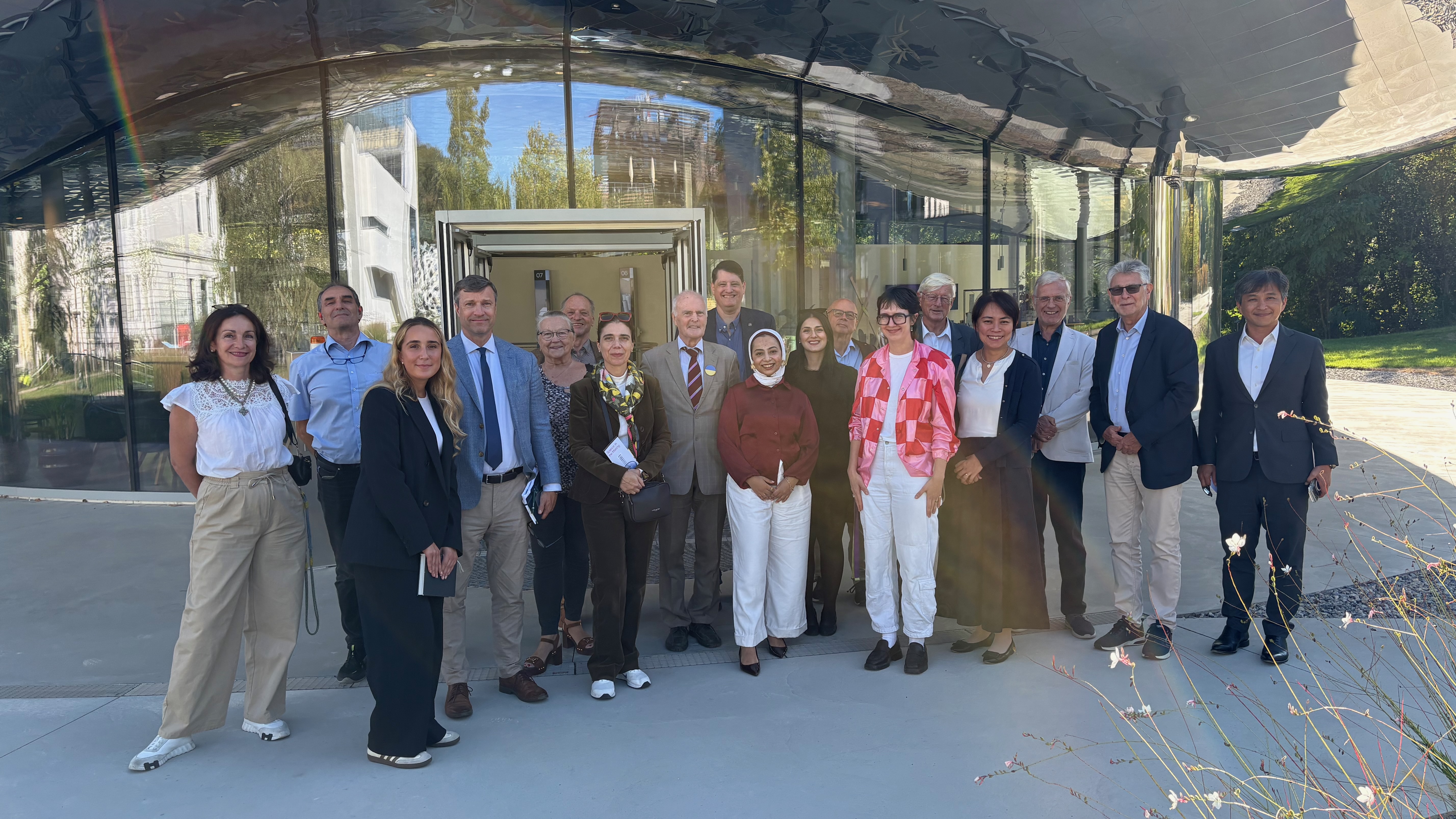
Founded on the principles of independence, scientific freedom, interdisciplinarity and curiosity-driven frontier research, ISTA has developed into an internationally oriented research institution in the heart of Europe. Its model combines world-class basic research with graduate education and the transfer of scientific results to the economy and society. The institute operates across disciplinary boundaries and places strong emphasis on international recruitment, career development and diverse public and private funding.
Since the inauguration of its campus in 2009, ISTA has experienced remarkable growth. In 2026, the institute comprises 95 research groups, more than 1,300 employees and over 370 PhD students, with more than 20 spin-off companies having emerged from its research activities. The long-term development plan envisages expanding the institute to 150 research groups and adding 70 faculty members by 2036.
The presentation highlighted ISTA’s strong record of research excellence and international competitiveness. According to the figures presented, ISTA achieved a 48.6% success rate in European Research Council (ERC) funding applications, while 80% of its professors have held or currently hold an ERC grant. More than €361 million in third-party funding has been secured to date. The institute also attracts global scientific talent: 38% of its professors were recruited from the United States, while researchers from approximately 80 nationalities are represented on campus.
Examples of current research demonstrate the breadth and ambition of ISTA’s scientific activities. These include research in quantum optics, genome regulation, astrophysics, quantum phases, visual sensing, geometric computing and biomolecular design. Among the highlighted achievements were the first entanglement of microwave and optical photons and the development of a new light-microscopy method for reconstructing mammalian brain tissue. ISTA is also working on mathematical and algorithmic foundations for accessible and sustainable AI, including AI for Science.
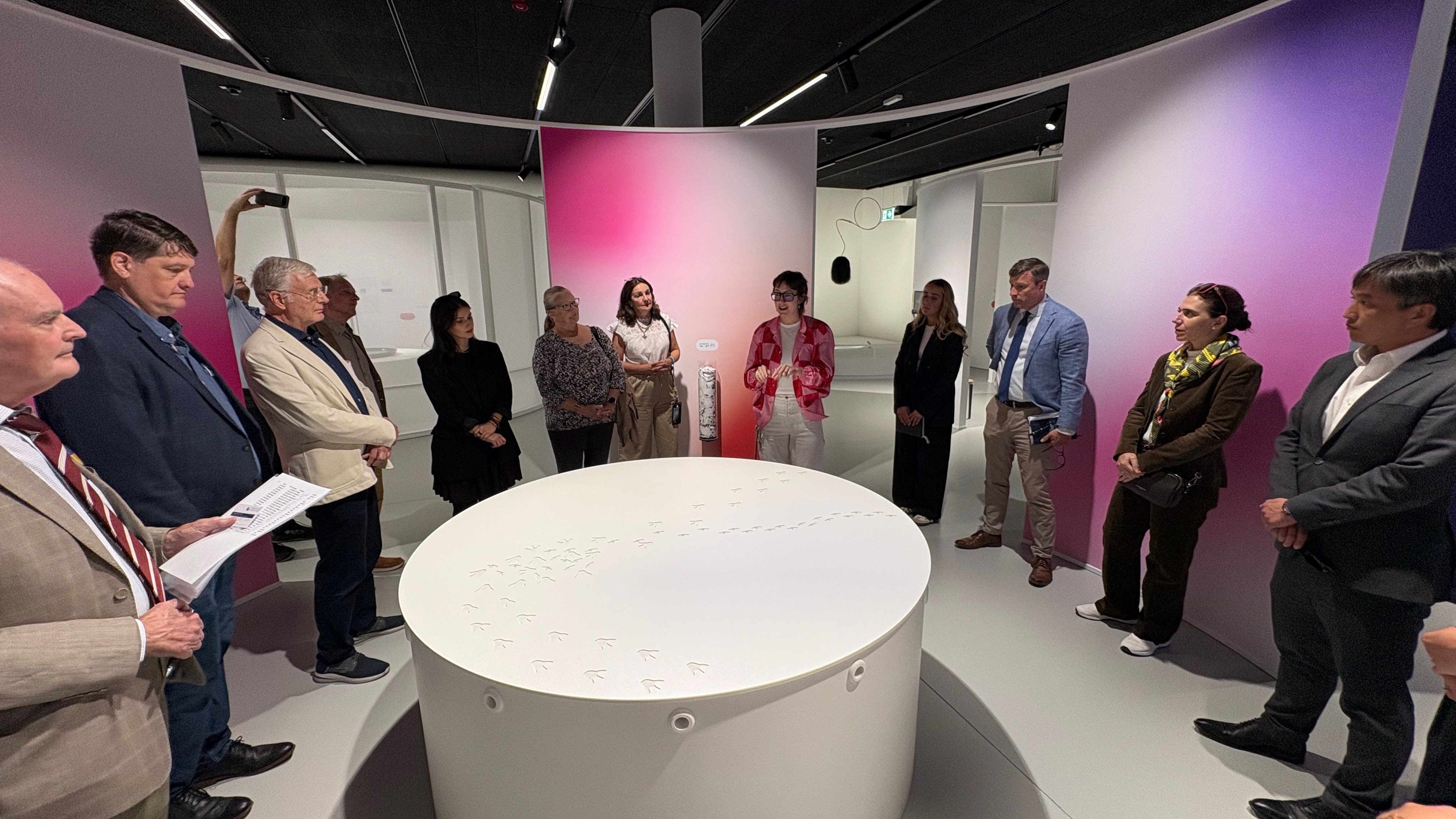
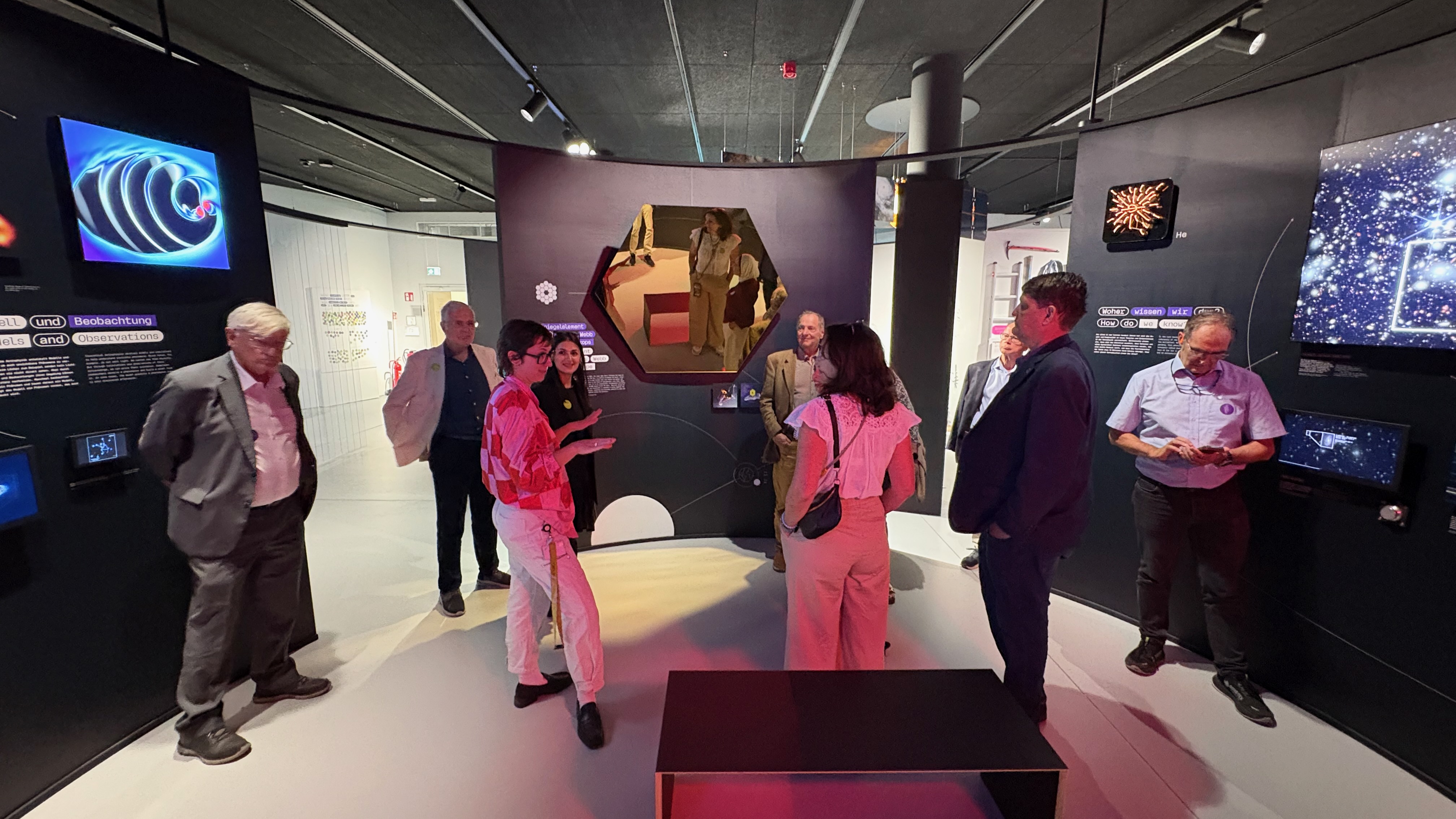
An important element of ISTA’s ecosystem is the connection between science, society and economic innovation. The VISTA Science Experience Center, opened in 2025, makes cutting-edge research accessible to the public through science education, teacher training and an interactive exhibition space. The institute also promotes technology transfer through intellectual-property protection, licensing, spin-offs and support for founders. Its seed-funding activities have invested €39.2 million in 29 companies, leveraging substantial additional funding from grants and co-investors.
The visit provided the delegation with valuable insights into ISTA’s development, its international research profile and its contribution to innovation in Austria and Europe. The presentation and the guided tour of the VISTA exhibition offered an especially vivid impression of how fundamental research can be communicated to a wider audience and translated into technological and economic applications.
ISTA’s mission can be summarized in three central objectives: performing world-class research, training future scientific leaders, and advancing science communication, education and technology transfer—with the ambition of serving as a role model for modern science management.